A recently published study in the "Journal of Economic Behavior and Organization" examines how maternal parenting practices are associated with children’s cognitive abilities, personality traits, behaviour, academic performance, and overall well-being in Bangladesh.
The study, titled “Nurturing the Future: How Positive Parenting Is Related to Children’s Skills and Well-Being,” was conducted by Laura Breitkopf, Shyamal Chowdhury, Shambhavi Priyam, Hannah Schildberg-Hörisch, and Matthias Sutter. ECONS carried out the primary field data collection that provided the empirical foundation for the research.
Study design
The research draws on detailed survey and experimental data collected from 5,644 children aged 6–16 and their parents, representing 3,543 families. Data were collected from 150 randomly selected villages across four districts and four administrative divisions of Bangladesh.
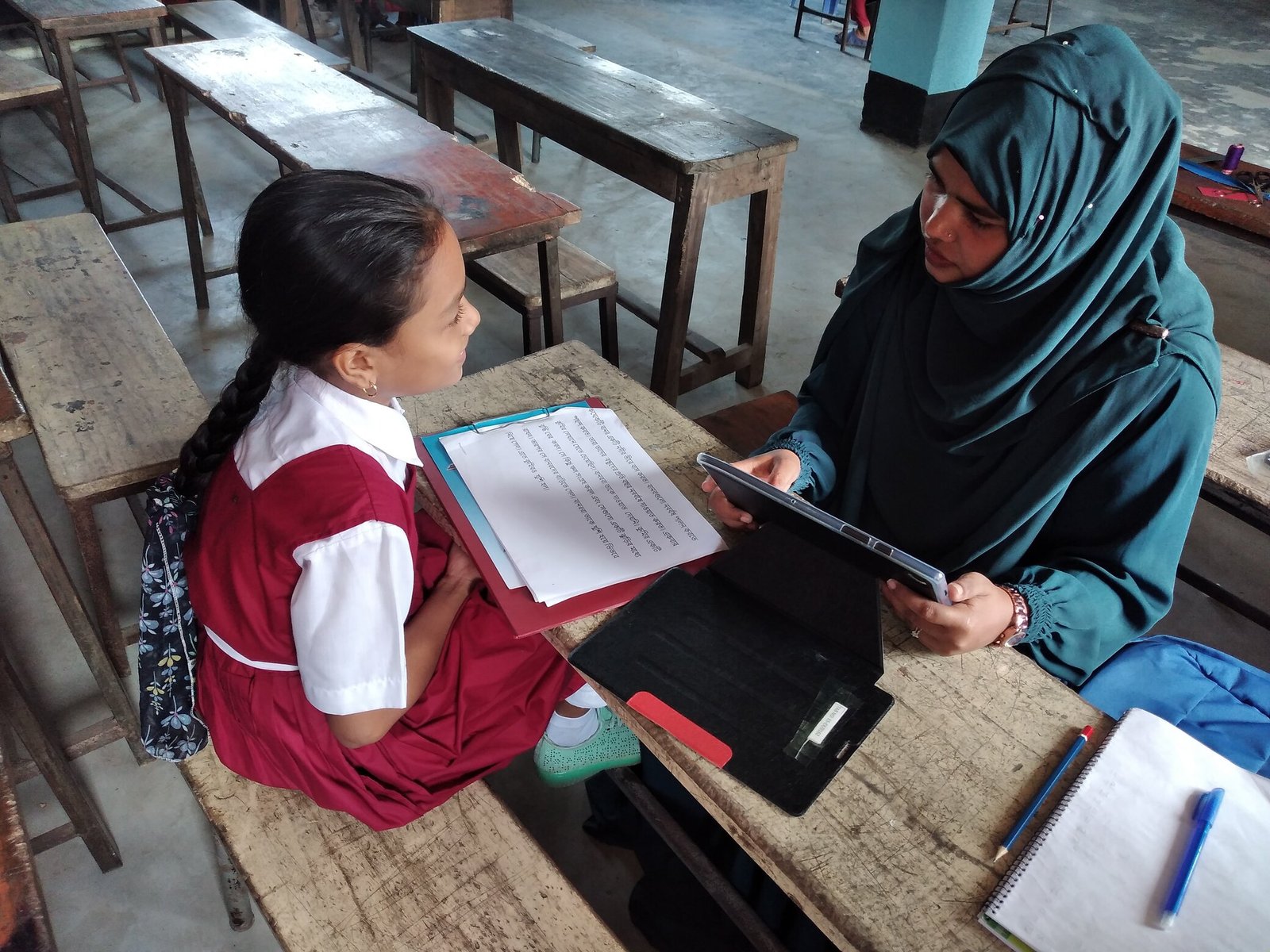
Trained field researchers interviewed children and their parents separately in their homes. The study combined household surveys, internationally established psychological assessments, academic tests, and incentivized behavioural experiments. These tools measured children’s:
৽ Cognitive ability and IQ
৽ Patience, risk-taking, and altruism
৽ Personality traits, self-control, self-esteem, and locus of control
৽ Academic performance in mathematics and Bangla
৽ Prosocial and risky behaviour
৽ Emotional and behavioural difficulties
৽ Happiness and life satisfaction
Maternal parenting practices were assessed across five dimensions: emotional warmth, monitoring, negative communication, psychological control, and strict control. Mothers displaying greater warmth and constructive monitoring, together with lower levels of harsh communication and controlling behaviour, were classified as practising a more positive parenting style.
Key findings
The study finds strong and consistent associations between positive maternal parenting and favourable outcomes across multiple dimensions of child development. Children exposed to positive parenting demonstrated:
৽ Higher IQ and stronger academic performance
৽ Greater altruism and prosocial behaviour
৽ Higher openness, conscientiousness, and agreeableness
৽ Greater self-control, self-esteem, and perceived control over their lives
৽ Higher levels of happiness and life satisfaction
৽ Fewer risky behaviours
৽ Lower levels of neuroticism and fewer emotional and behavioural difficulties
Some of the strongest relationships were observed for self-control, self-esteem, prosocial behaviour, and reductions in internalizing and externalizing behavioural problems. The relationship between parenting and children’s outcomes was broadly similar across different ages, although it was slightly stronger among younger children, particularly for cognitive ability, educational achievement, and happiness.
The study also reports that positive parenting was associated with greater altruism and lower risk-taking, but unexpectedly with somewhat lower measured patience. The authors suggest that this result may reflect the economic and environmental context of rural Bangladesh, where frequent shocks can reduce the perceived benefits of waiting for future rewards.
Significance of the research
The research is distinctive because it evaluates an unusually broad range of child outcomes within a single analytical framework. It also provides important evidence from Bangladesh, addressing the limited representation of lower- and middle-income countries in the international literature on parenting and child development.
As the study is based on cross-sectional data, the findings should be interpreted as associations rather than causal effects. Nevertheless, the results demonstrate that supportive, warm, and appropriately attentive parenting is closely related to children’s human-capital development, socio-emotional skills, academic performance, behaviour, and well-being.
Through its implementation of the large-scale primary data collection, ECONS contributed to generating high-quality evidence that has now informed an internationally published academic study on parenting and child development in Bangladesh.